By Dan Shine
Voice Columnist
World War II,
Here and “Over There”
Appenwihr, France
Feb. 1, 1945
As the screaming artillery shells fell and exploded around them, a dozen GIs sprinted for the safety of the distant woods and their own lines. The deep snow sucked at their feet and made them slip as the bursting shells showered them with clods of frozen dirt. The German artillery seemed sure to annihilate the GIs at any moment.
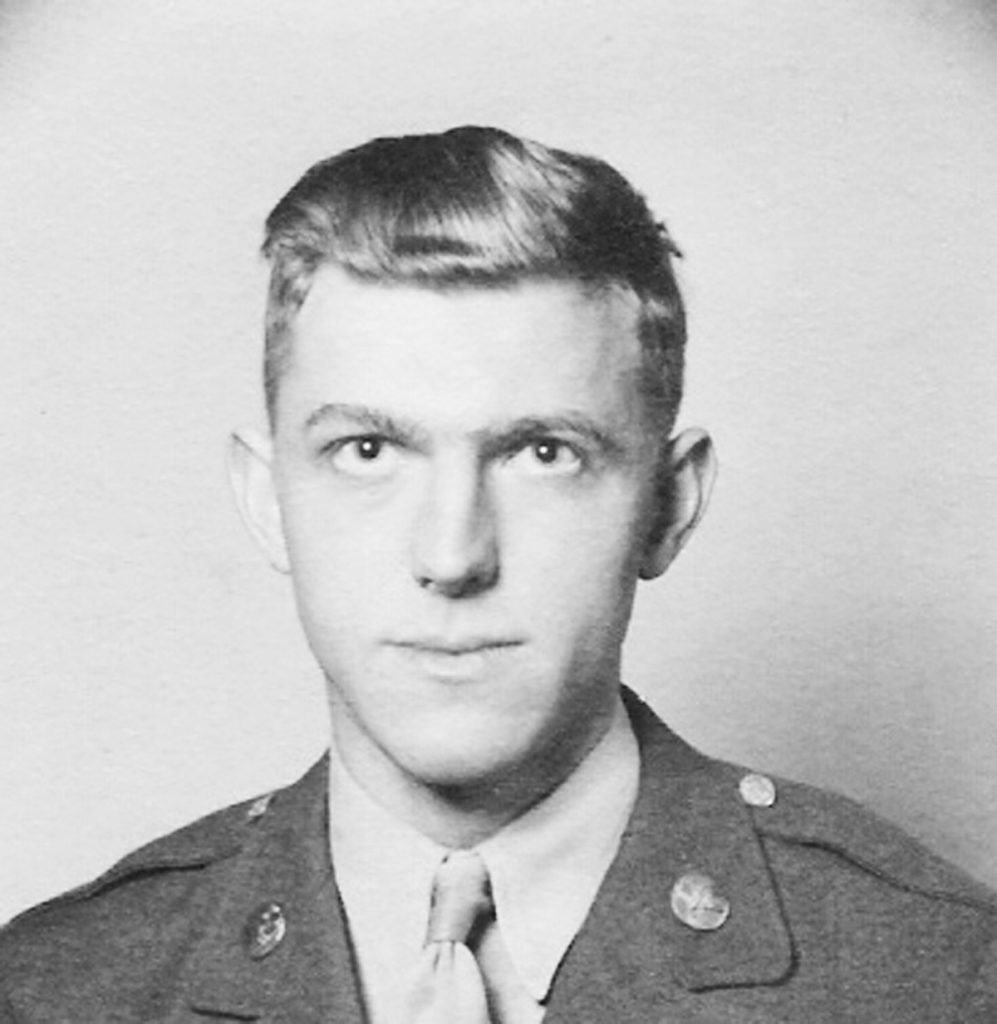
Private Daniel R. “Bob” Shine felt as though his lungs would burst. As radioman for the reconnaissance squad, he carried all of his normal fighting equipment, plus their SCR-300 shortwave radio, which was housed in a large metal backpack. In all, he was running with more than seventy pounds of equipment strapped to his body. Shine felt as if he couldn’t run another step–but run he did–run or be blown to bits in this open field outside of the village of Appenwihr.
BOOM! One shell fell much closer than the rest, landing less than forty feet away. A running GI stumbled and fell. When he got back onto his feet, it was clear that the force of the blast had rattled his head. The woods were getting closer now, but so were the exploding shells. Would they make to safety it in time?
(From the short story, “Bronze Star”)
~~~
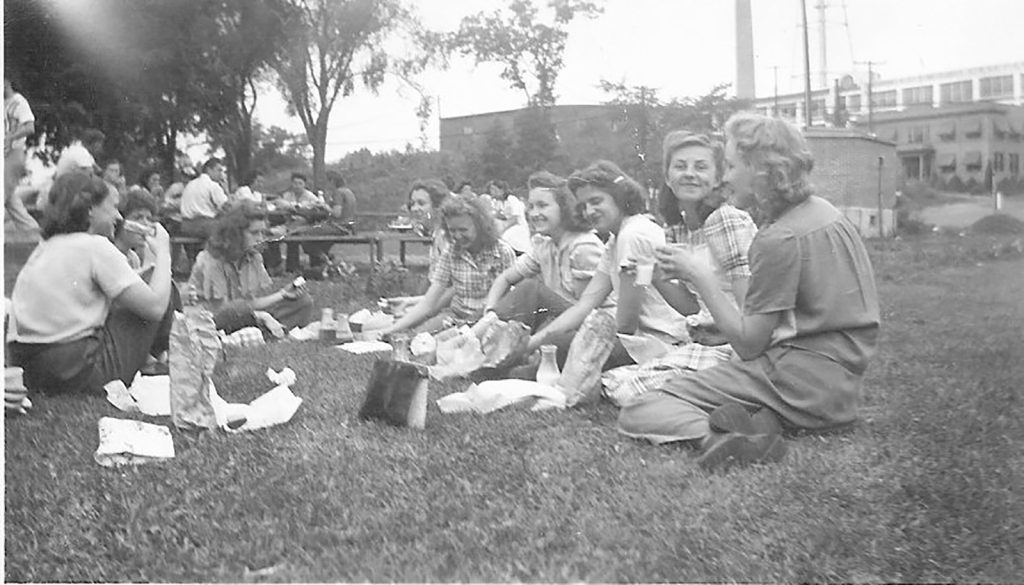
Years later, the boy’s mother would tell him the story of World War II from her perspective: “None of us wanted The War, but when it came to us, we knew that we were all in it together, and we knew what we had to do. While your father was overseas, I spent part of the war working in the Armstrong factory, making the rubber landing craft that our soldiers would need to land on the beaches. Later on, I went to work at New Haven Hospital as a nurse. There were almost no young men left at home to work in the factories, so women and girls took their place.
“Your father wrote me letters every week, and told me not to worry, because he was in no danger at all, and that he would be coming home soon.
“Your grandfather was the foreman of the Winchester machine shop, in the factory where they made the rifles and ammunition for the soldiers. Your grandmother worked for the Red Cross, organizing blood drives, because there was never enough blood for the military hospitals. Everyone pulled together, because we knew that we had to — our boys in uniform were depending on us.
“Food and gasoline were rationed, so most people walked or took the streetcar. We grew Victory Gardens, in order to make up for the vegetables that couldn’t be gotten at the store.
“The two buckle companies were hard at work, making buckles and fasteners for our servicemen’s uniforms and equipment, and there was a cannon factory on Wood Street that made cannons for the Army.
“Some of my friends from school worked at the AC Gilbert factory in New Haven, where they had stopped making toy trains, so that they could make the instruments for the bombers.”
And then, mother took her 1942 West Haven High School yearbook down off the shelf. Carefully, she laid her finger beneath one photo after another, saying, “This boy went to the Pacific, and was killed there. This boy was fighting the Germans in France and never came home. This boy lost a leg. This boy came home and he looked the same to us, but inside…he…wasn’t the same anymore…” They were boys, all of them, and clearly they were called upon to shoulder an enormous burden that was far beyond their years. This was pretty intense stuff for an eight-year old to hear and absorb, and the stark memory of that day and that story has stayed with the boy for more than 60 years.
“Lest We Forget.”