By Dan Shine
Voice Columnist
This week, we are fortunate to have a story as set down by Loretta Bon Tempo Forte, and submitted by her daughter Valerie Forte. Loretta grew up in Allingtown, just downhill from the intersection of Forest Road and Derby Avenue; this story is from about 1920:
~~~~~
Part One
See part 2
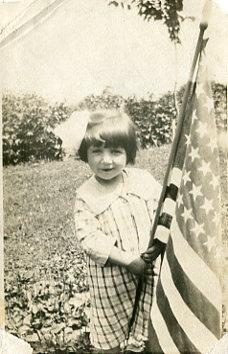
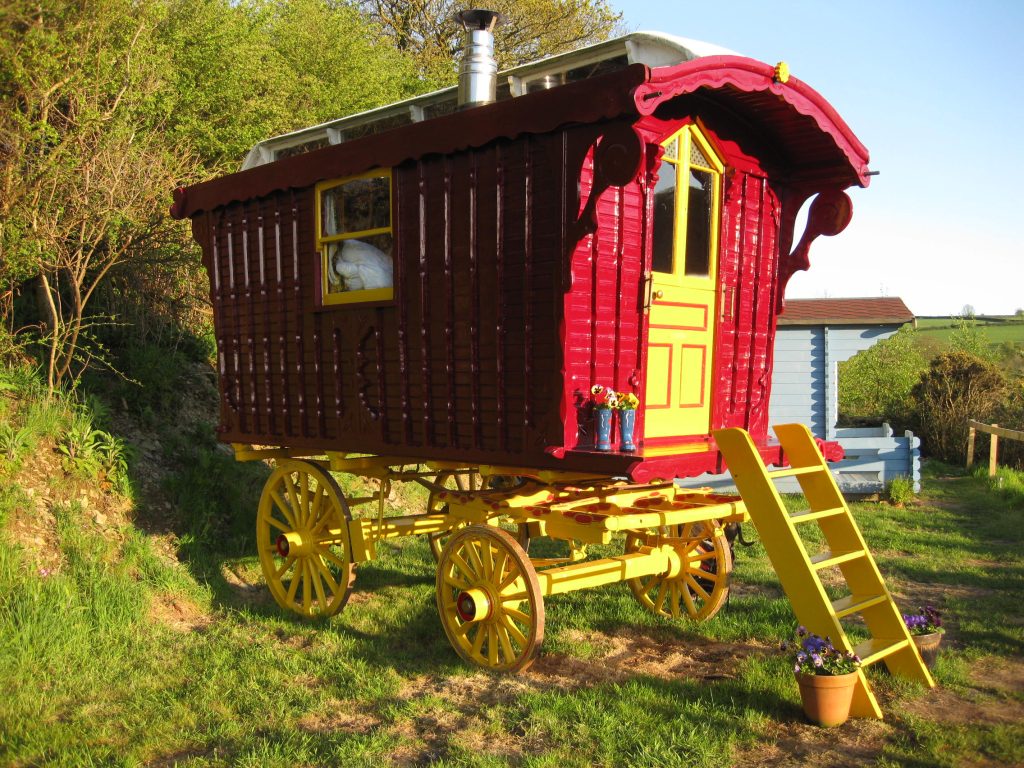
Fascination and fright! As the weather warmed and ‘peepers’ were heard at night, it was time for ‘them’ to come. “Little children have big ears and should be seen but not heard’, was a popular saying in my childhood days. I didn’t talk much but I heard a lot. And one of the things I heard was that ‘they’ liked to kidnap little children. Child psychology meant nothing in those days.
THEY were the gypsies. They were gorgeous, colorful, fascinating and foreign…’dirty’ I was told! Watch out for them, don’t get near them, especially if you are alone. They will steal whatever you are playing with and might even steal you! Those were supposedly the facts and I heard them from Ma and Pa, the neighbors and my siblings.
The gypsies arrived with the warm weather. Their tents were pitched on Forest Hills, just a block from our house on Derby Avenue. It did not take them long to set up their encampment, and the tents were big enough for an entire family. I don’t recall much in the way of furnishings, just lots of rugs that were laid out on the floors and also used as bedding. I can’t really know what was inside, the door was covered by a canvas flap and only a furtive glance was given.
The gypsies looked beautiful to me, especially the young girls – full, colorful dirndryl skirts and wide, gathered, colorful ruffle neck blouses and always a colorful bandana on their dark hair. Most of the time they were barefooted. But long dangling earrings were a must for their attire.
They knew our house well because we had a well, situated on an incline, surrounded by a stone wall. It had a pump and gave us delicious, cold clear water. It was my father’s pride. Even our neighbors came in summer to get pails of this delicious water to drink. During the winter it was closed off and just about ‘gypsy time’ my father started it up. “primed it”, was what he called the process.
So the gypsies discovered it and came with many pails, sometimes many times during the day. We were not to refuse them but were to take their pails, and fill them, and bring them back to where they waited outside our fence. Our yard was enclosed by a high, wire fence. There was one gate that opened to our front sidewalk and two big gates that closed off our driveway, the gypsies were to stay outside of those gates.
One year the signal that the gypsies had arrived ‘on the hill’ involved Mrs Redfield, who had an estate across the street. She would have her “hired men’ drive her cows to the hill to graze. But once the gypsies came, they did not take them up there. This one year the highlight of the gypsy arrival – the ‘announcement’ that they had come during the night, was that one of Mrs Redfield’s cows came running home with a pair of red silk bloomers entangled in his horns!!!
I remember the gypsy men as being dark and hairy. I was too young to notice whether the young boys were attractive.
The gypsy encampment was the excitement of our summer, aside from the fact that I lived in dread all day that they would come and request water and I was too small to carry it to them. Secretly, there were several times when I let kind young gypsy women in to fill their own buckets from the pump.
But I couldn’t wait for the night!
We were not allowed to go see the gypsies without our parents, but usually, at night, everyone went, most of our neighbors, our friends the Squires family who owned a small farm across the street, everyone went unless it rained. We would go before sunset, you could already hear the music – guitars – or bell like insturments, and the singing.
The campfires would be lighted – they would use them for cooking and later the fires glowed and everything looked beautiful. Sometimes the girls in their bare feet and swinging skirts would dance and dance and twirl and twirl.
Once, on Mother’s Day, my Uncle Harry took me up in the late afternoon to the encampment. At that time, the Mother’s Day custom was that a child wore a pink flower if your mother was alive, and a white flower if your mother had died.
Someone at home had given me a pink carnation, a paper one, but it did look real. I wore it up to the gypsy encampment and a pretty young gypsy girl, probably a teen ager, took a liking to my pink flower. There were always big crowds on Saturday and Sunday nights waiting for the dancing to start, and the people had been begging this particular young girl to dance. Some said she was the best dancer of all.
She seemed to be reluctant, but just before dark, she consented, providing that I GAVE HER THE PINK FLOWER! The crowd now turned to me to persuade me to give her the pink flower. Uncle Harry, a young bachelor, also wanted me to give her the pink flower, so that he would be in her good graces, I was thinking!
The girl had an accordionist, one of several, come over to me as an even bigger crowd gathered round, and I gave her the flower.
And then she discovered that it was PAPER!
I was overcome with embarrassment and disappointment. I loved that carnation. She proceeded to have a tantrum, fussing and refusing. But, finally, she put my flower in her hair and danced.
All I saw was hair swinging, skirt swirling, and the crowd cheered when her bare legs showed as her skirt flew out! After the dance, she kissed me and asked if she could keep the flower!
To be continued-
In the 1950s, when I was young, I was also warned about how evil gypsies were. I was never afraid of them, but I cautious to not go near a gypsy when I saw one of them. I never got to see a gypsy camp, but I did see a few gypsies during my growing up years in the 1950s. I guess there was a bias against gypsies from the 1800s.