By Dan Shine
Voice Columnist
Stories From The Great Depression
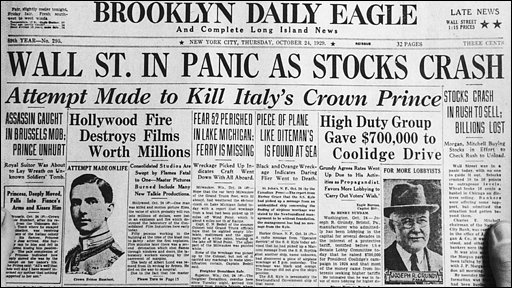
The Great Depression began with the stock market crash of 1929; it marked a period of hard times all throughout the world. At its worst, 25% of eligible American workers were unemployed; by 1932, the country’s economic output had fallen to half of what it had been in 1929. Thousands of banks failed, and many people lost their homes, their savings and all hope. Long lines of the dispossessed formed each day outside of the countless soup kitchens throughout the country. Masses of people were forced to live in shanties and tents. The suicide rate skyrocketed.
It is asserted that Federal monetary policy had in part caused the depression, and the US government now stepped in to ease the massive suffering that was taking place. The New Deal provided relief, recovery and economic reform; organizations such as the Civilian Conservation Corps and the Works Progress Administration were created to give workers a source of income, and restore to them the dignity of having something meaningful to do.
Our suffering economy was given a boost when the countries which were already at war needed supplies and looked to America to make them. After Pearl Harbor was bombed on December 7, 1941, America entered the war, and the government enlisted more than 10 million men and women into the military. Since so many were fighting in the war, it was left for those left at home to work in the factories to make supplies for the war effort.
The desperate need for soldiers, pilots, and workers to make ammunition, weaponry, and military craft all contributed to the end of the Great Depression. At long last, the economy of America rebounded, and the Great Depression came to a close.
———-
Upon his return from World War I in 1918, Dan Shine went back to his job as a blacksmith on the New Haven Railroad. One day in 1932, when he was riveting a bridge, he lost his grip and fell onto the railroad tracks. As he was falling, he hit one of the overhead “catenary” wires and broke his neck. He lay across the tracks until an ambulance came and rushed him to New Haven Hospital—precursor of what we today call Yale New Haven Hospital. Because his neck was broken, he had to lie in a hospital bed with his head between sand bags for a whole year, so that the bones could heal properly. And when he was able to work again, he couldn’t work as a blacksmith anymore. In 1933, one quarter of America’s workforce was unemployed, and Dan was still recovering from his fall. The odds were against him, but somehow, he found a job repairing and maintaining the houses that had been repossessed by the banks. The income from this job sustained his family all through the remaining years of the Great Depression, and as a result, they were able to keep their own home on Union Avenue.
__________
Like all those of her generation, Josephine Invernale lived out her childhood during the Great Depression. Her family was poor, but she still felt fortunate because there were many families who had it much worse than hers did. They lived in a house at the end of West Haven’s Maple Street, and her father was a watchman at the Blakeslee boat yards.
In her later years, she didn’t tell many stories of her childhood, but there was one that she shared with a smile: she told of herself and her three sisters–four little girls sleeping in one bed–with two heads at each end of the bed and eight little feet kicking and kicking at each other all night long. In the winter, it was cold and drafty in their bedroom, because there wasn’t much heat, and they didn’t have storm windows. But at least her father had work, and there was always enough to eat.
__________
In November, 1930 as the Great Depression tightened its grip on the United States, thirty-two year old Henry Chapin discovered that he had just become an economic statistic. Henry was a mechanic serving the steam locomotives of the New Haven Railroad, and he had just been informed that his job had been eliminated.
Henry’s foreman had a young family just like he did, and was sympathetic to his plight. “Henry, I know there’s a job opening on the Boston and Maine Railroad up in North Conway, New Hampshire. Of course you’ll have to move, but it’s steady work in the roundhouse up there. Here’s the name of the man to contact, if you’re interested.” Henry gathered up his lunch pail and his coat and, with head bent, walked out into the cold and darkness to tell the bad news to his family.
A few days later, Henry, his wife and two little girls left their home in West Haven, bound for North Conway. In the back seat of the Packard were their most needed possessions; roped into the trunk was the family washing machine. The Chapins spent most of the Great Depression living in a rented farmhouse on the outskirts of North Conway, while Henry maintained and repaired the steam locomotives in the B&M roundhouse. This branch of the B&M served the transportation needs of those pioneers in a brand-new sport–downhill skiing.
And what became of Henry Chapin? He brought his wife and daughters back to their home on Kelsey Avenue, for he had been called to Winchester’s arms factory to manage their machine shop, as the factory workers labored mightily to support the war effort.
__________
The year was 1935, and the Great Depression was in full swing. President Roosevelt was telling the people something about a New Deal, but those words just didn’t seem to be putting food on Nicholas Invernale’s kitchen table. Nick was fourteen and had just finished eighth grade when he quit school and entered the work force.
His parents had left the poverty of Naples some twenty years earlier in search of a better life in the United States, but in New Haven’s Hill community, opportunities were now as scarce as they had been back in the Old Country; indeed, his father had been looking for work for months, but could find nothing.
Nick wanted desperately to help his family. He had four younger sisters and a younger brother, and he just knew he could help them and his mother. He saw nothing noble in his efforts—he simply saw need and necessity within his family—and he had always been a loyal brother and son. And so, Nick Invernale went off to find work.
What he found were two jobs: one job delivering newspapers and one delivering fish. The newspapers, he folded into triangles and threw them from his bicycle onto the second-and-third-floor porches of his customers as he rode past. That bicycle was also useful in his other job: making deliveries for the local fish market. Most of the traffic in The Hill in those days was by trolley or by foot, for few could afford cars or gas. Here and there, Nick would pedal his bicycle past horses pulling delivery wagons and drays, which were still in use during that period.
Each week, Nick earned eleven dollars: Of this, he gave ten dollars to his mother, and kept a dollar for himself, and this was how families got by during the Great Depression.
At the close of the Depression, Nick went off to fight the Japanese in WWII. When he returned from India and Burma, he resumed his life of picking up and delivering—only now he did it from a truck—for Nick had become a Teamster.