By Dominic Konareski
Voice Writer
As people, towns, and cities across the country celebrate the country’s 250th birthday, two of the most famous and influential Presidents went through West Haven. Both George Washington and Abe Lincoln made their way through the West Haven/New Haven in the last two-and-a-half centuries.
George Washington has visited Connecticut a handful of times before, during and after the Revolutionary War. A former British soldier, he would end up as an American Rebel and be the first-ever President of the United States.
On June 28, 1775, Washington would go through West Haven (known as West Farms at this time) during his journey from Philadelphia to Cambridge to take Command of the Armies of the United Colonies. Washington crossed the Oyster River bridge and ended up on Jones Hill into West Haven and the Green. He would end up going down on the street now called Campbell Avenue to Milford Hill over West River, leading him into New Haven.
In the fall of 1789, roughly six months into his presidency, Washington was touring the country.and wanted to fully see the economy of the nascent United States of America himself. Although he was riding high on popularity, this was no victory lap for President Washington. Overall, this was just the first of three total trips he would take for this “investigation” during his presidency. Washington visited Connecticut, Massachusetts, and New Hampshire.
Washington traveled in a carriage open to the breezy fall that New England weather is. Pulling his carriage was four bay horses with a luggage wagon following behind. A slave led Washington’s white horse named Prescott, which Washington would mount and ride on before entering the town.
Washington reportedly used West Haven as a pass through to New Haven.
“We took the lower road through West Haven, part of which was good and part rough,” wrote Washington in his diary.
Some 71-years later after Washington scrolled through West Haven, on came an unknown man named Abraham Lincoln.
Abraham Lincoln came into New Haven just once during his entire life. In 1860 Lincoln visited the Elm City. It is possible someone alive during this time could have seen Washington come through West Haven in 1789 and also see Lincoln as well in 1860.
When Lincoln came to New Haven, he was just days removed from giving what is now known as the Cooper Union Address in New York. He would arrive in New Haven on Tuesday, March 6, 1860.
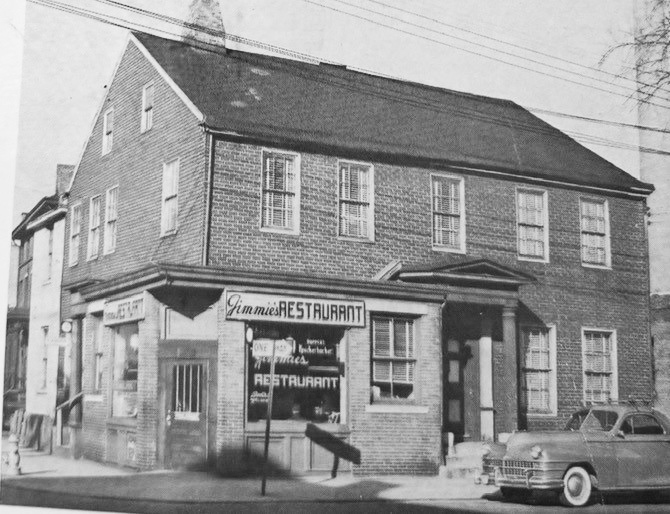
At the corner of Olive and Court Streets in New Haven sat an old house that at one point had a beer tavern in it in its latter years. In 1860 that building, that house was the home to James F. Babcock, who was the publisher of the New Haven Palladium, and for a total of two nights while on a campaigning trip Abe Lincoln would sleep in one of Babcock’s upstairs bedrooms.
Lincoln would give what is widely considered to be one of his greatest speeches while in the Elm City. Lincoln was just simply another Republican politician at the time and widely viewed as a dark-horse candidate at the time. Lincoln did not have his famed beard at the time, but his anti-slavery views and overall political style were the same as he is widely known of today.
There is a very good chance that Lincoln would never have come to New Haven to begin with if it were not for Nehemiah D. Speery, who was the Republican State Chairman at the time. Sperry sent a representative to New York for the Cooper Union Address to invite Abe down to New Haven.
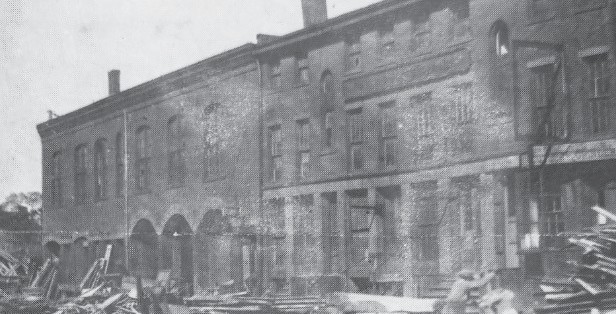
Lincoln, staying at Babcock’s house, was no accident either. The Palladium was a Republican-leading newspaper at the time, compared to the New Haven Register, which was extremely anti-Republican and anti-Lincoln. Babcock’s house also sat just a few door numbers down from that Union Hall, which was located between Union Street between Water and Fair Streets. Union Hall was the biggest in town, but unfortunately was above a stable. So, along with a crowd of the masses, there was also the smells associated with such an establishment accompanying Lincoln.
Abraham Lincoln would debate with yelling attendees in the crowd who argued for slavery and the pros that they felt came with it. Lincoln reportedly argued for an hour-and-a-half against the men who were trying to pass slavery off as good. According to Edgar Lee Masters, the New Haven speech was “a better performance than that of the Cooper Institute.”
The stable (Josselyn’s Livery Stable) and Union Hall all disappeared when the New Haven Railroad cut through below State Street. Lampson Lumber Company briefly took over that area, but just like Babcock’s house that Lincoln slept in, it is now a mix of modern apartments and industrial business, along with a dog park.
I knew Washington had visited the area several times, but this is the first time I heard that Lincoln also visited our area. I still keep learning new things.